The Future of Work Isn't AI. It's Agentic AI.
Agentic AI is changing the conversation from AI as a tool to AI as a workforce. The biggest shift won't be humans versus AI, but professionals who know how to lead AI agents versus those who don't. The future of work has already begun.
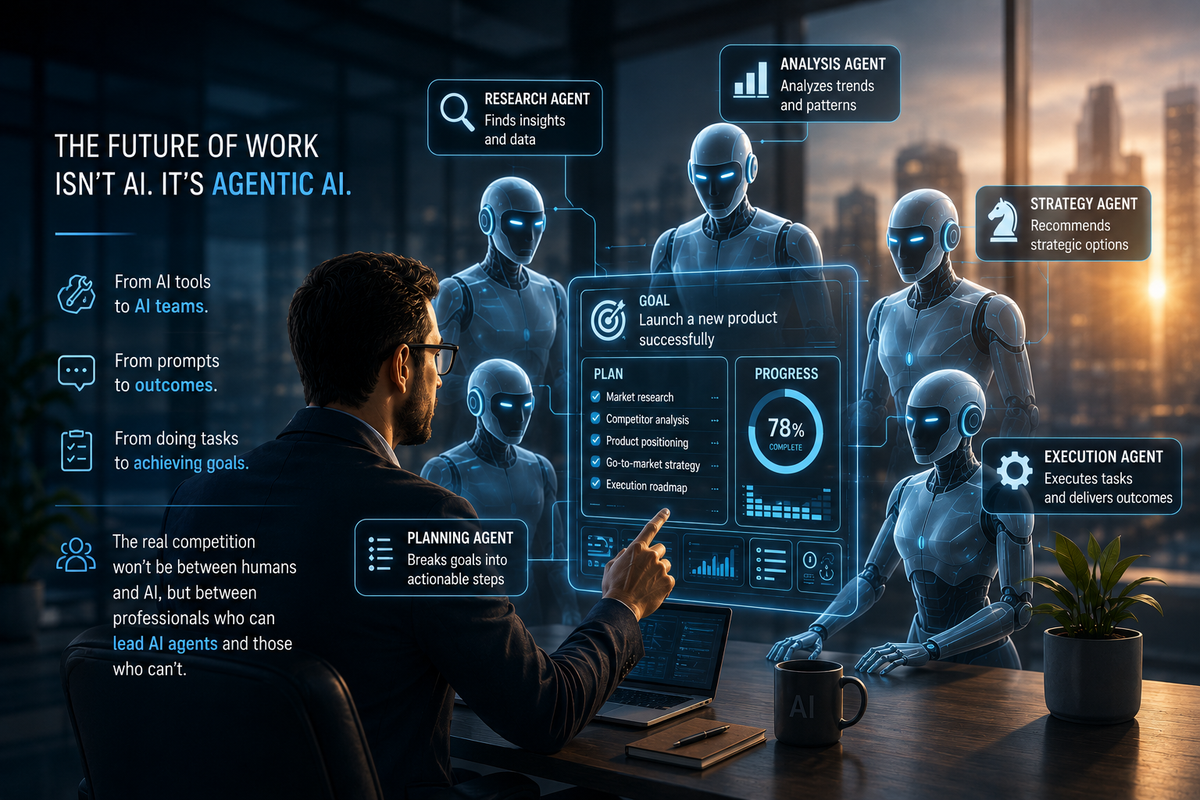
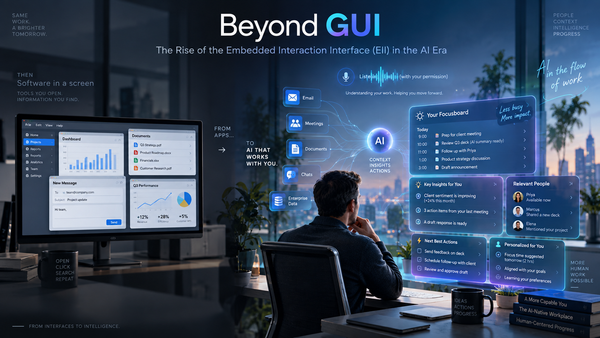
About a year ago, Elon Musk made a bold statement. He said he wanted to simulate an entire software company like Microsoft using AI. Whether or not that vision becomes reality is almost beside the point. What caught my attention was not the ambition itself, but what it revealed about the direction AI is heading. Until recently, AI was something we used. We asked questions, generated content, wrote code, or summarized documents. Every interaction required us to tell it exactly what to do. Today, however, something fundamentally different is emerging.
We are moving from AI as a tool to AI as a workforce.
Welcome to the age of Agentic Systems.
From Assistants to Digital Workers
The first generation of AI assistants was reactive. You asked a question, and it answered. You gave it another instruction, and it completed another task. Every step depended on you. Agentic systems turn that relationship upside down. Instead of waiting for the next instruction, they begin with an objective and figure out how to achieve it.
Give an agentic system a business goal instead of a task, and it can break the goal into smaller pieces, decide which specialist agent should perform each task, execute the work, validate the outputs, recover from failures, and continue until the objective is complete. Instead of having one intelligent assistant sitting beside you, you are beginning to have an entire digital team working with you.
That is a very different proposition.
The Shift Has Already Begun
This isn't a futuristic vision. It is already happening, quietly but rapidly, across enterprises.
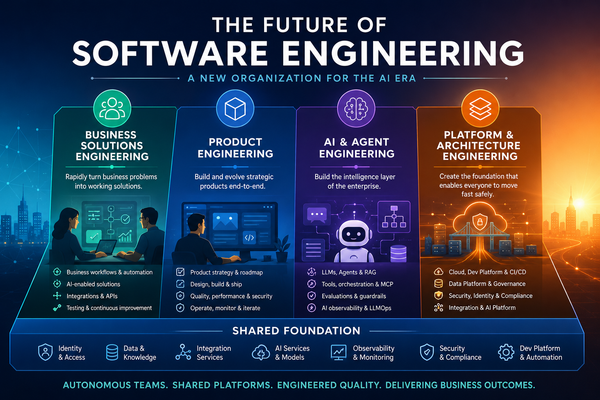
Many organizations have moved beyond AI experiments and are embedding specialized agents into production systems. Software development is perhaps the clearest example. AI agents no longer simply autocomplete code. They design modules, write code, run tests, fix bugs, generate documentation, and even submit pull requests. Increasingly, software engineers are evolving from people who write every line of code into architects, reviewers, and orchestrators who guide these intelligent systems.
The same pattern is emerging across industries. Banks are deploying agentic systems to detect fraud, automate compliance checks, process documentation, and accelerate loan approvals. Customer service organizations are replacing standalone chatbots with teams of specialized agents—one understands customer intent, another retrieves account information, a third recommends solutions, while a fourth determines whether the interaction should be escalated to a human. Supply chains are also becoming more autonomous as intelligent agents monitor inventory, forecast demand, adjust production schedules, and respond to disruptions in real time.
The important story isn't that AI performs these individual tasks. It is that multiple AI agents are beginning to collaborate with one another to accomplish business objectives from end to end.
The Next Evolution: Teams of AI
The future of agentic systems will not be built around one super-intelligent agent trying to do everything. It will be built around teams of specialized agents, each with deep expertise in a particular function and the ability to collaborate seamlessly.
Imagine a sales opportunity arriving at a company. One agent qualifies the lead, another prepares the proposal, a pricing agent evaluates commercial options, a legal agent checks contractual compliance, a finance agent validates profitability, and finally a communication agent prepares customer-ready material. Information flows naturally from one specialist to another, much like work moves across departments today - except it happens in minutes rather than days.
That is where enterprise AI is heading.
Intelligence Will Be Everywhere
Another important shift is where these agents will operate. Today, most sophisticated AI workloads run in the cloud. Tomorrow, intelligence will become distributed.
Imagine manufacturing equipment with embedded agents continuously monitoring machine health, autonomous vehicles making split-second decisions locally while consulting powerful cloud models only for complex reasoning, or hospitals and retail stores running thousands of lightweight agents that coordinate with centralized intelligence when needed. This hybrid model combines the speed of local processing with the reasoning power of the cloud, making intelligent systems faster, more resilient, and more practical.
Organizations Will Have to Change Too
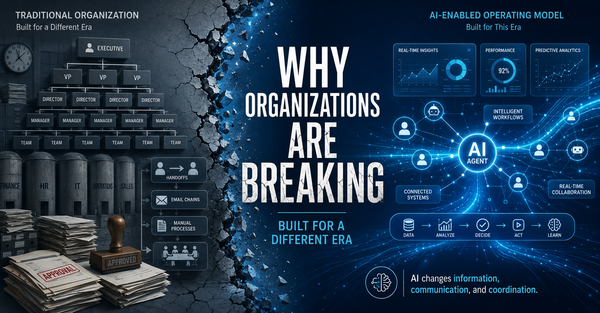
Perhaps the biggest misconception is that companies can simply insert AI agents into existing business processes and expect transformational results. Most enterprise workflows were designed around human limitations. People work fixed hours, wait for approvals, exchange emails, attend meetings, and hand work from one department to another.
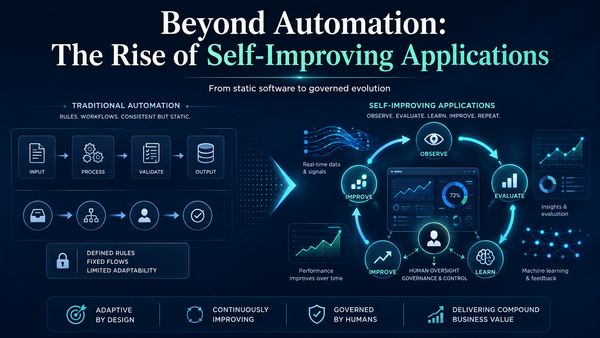
Digital workers operate differently. They work continuously, collaborate instantly, never lose context, and can execute multiple workflows simultaneously. Organizations that merely automate existing processes may see incremental improvements. Those that redesign their operating model around human-AI collaboration are likely to achieve something far more significant.
The real opportunity isn't automation.
It is reimagining how work itself gets done.
What Happens to Human Jobs?
This is the question everyone eventually asks.
My view hasn't changed from what I've shared in previous posts. There will undoubtedly be displacement. Every major technological revolution has eliminated certain kinds of work. But every one of those revolutions has also elevated human capability and created entirely new opportunities. The challenge lies not in whether work will change, but in how quickly we prepare people for that change.
The future is unlikely to be humans versus AI. It is far more likely to be humans working alongside teams of AI agents. Repetitive, procedural, and administrative work will increasingly be handled autonomously, allowing people to spend more time solving problems, making decisions, exercising judgment, and driving innovation. Our value will gradually shift from executing work ourselves to directing, validating, and improving the work produced by intelligent systems.
The Challenge We Must Not Ignore
There is one consequence of this transformation that deserves much more attention.
Every experienced professional was once a beginner. Junior developers learned by writing simple programs. Junior consultants built presentations and spreadsheets. Junior lawyers reviewed contracts. Those repetitive tasks were never just "work"; they were the training ground where experience, intuition, and judgment were developed.
If AI performs much of this entry-level work, where will tomorrow's experts gain that experience?
Researchers, including those at the Harvard Kennedy School, have highlighted this as a genuine concern. Organizations will need entirely new approaches to developing talent. Otherwise, we risk creating a generation of professionals who are expected to exercise senior judgment without ever having gone through the experiences that build it.
The Real Competition
Interestingly, increased AI adoption does not necessarily translate into fewer jobs. We are already seeing strong demand for professionals who understand how to work effectively with AI. Software engineering illustrates this well. While routine coding tasks are increasingly automated, demand remains strong for senior engineers who can design systems, evaluate AI-generated solutions, integrate complex architectures, and lead intelligent development workflows. The profession is changing, but it is certainly not disappearing.
I believe the real competition over the next decade will not be between humans and AI.
It will be between professionals who know how to lead AI agents and those who don't.
Just as spreadsheets didn't eliminate accountants but transformed accounting, and just as the internet didn't eliminate businesses but changed every business, agentic systems will fundamentally reshape knowledge work. The professionals who learn to orchestrate digital workers, redesign workflows, and apply uniquely human judgment where it matters most will become extraordinarily valuable.
The future isn't about writing better prompts anymore.
It's about learning to lead teams where some of your most productive colleagues may not be human at all.